
Low-cost & large-scale
Thanks to their scalability and the ability to decouple power capacity from energy capacity, RFBs comprise one of the most promising systems for long-duration energy storage. However, metal-based batteries require components that are expensive, corrosive, and toxic. Further, the use of aqueous solvents can be limited by the electrochemical generation of explosive hydrogen gas. The use of organic ions in place of metal-based ions, and organic solvents in place of aqueous solvents, creates a low-cost battery that is sustainable and synthetically tunable. However, previous attempts to build an organic RFB suffered from poor efficiency and durability of the battery due to crossover contamination between the chemically different catholyte and anolyte.

A single organic material.
In our technology, we use a symmetric system with a single organic material as both anolyte and catholyte, which is key to improving the performance, cycle life, and energy density of organic RFBs. Our invention leads to an inexpensive, robust, and environmentally sustainable technology for long-duration energy storage.
Real-World Problem
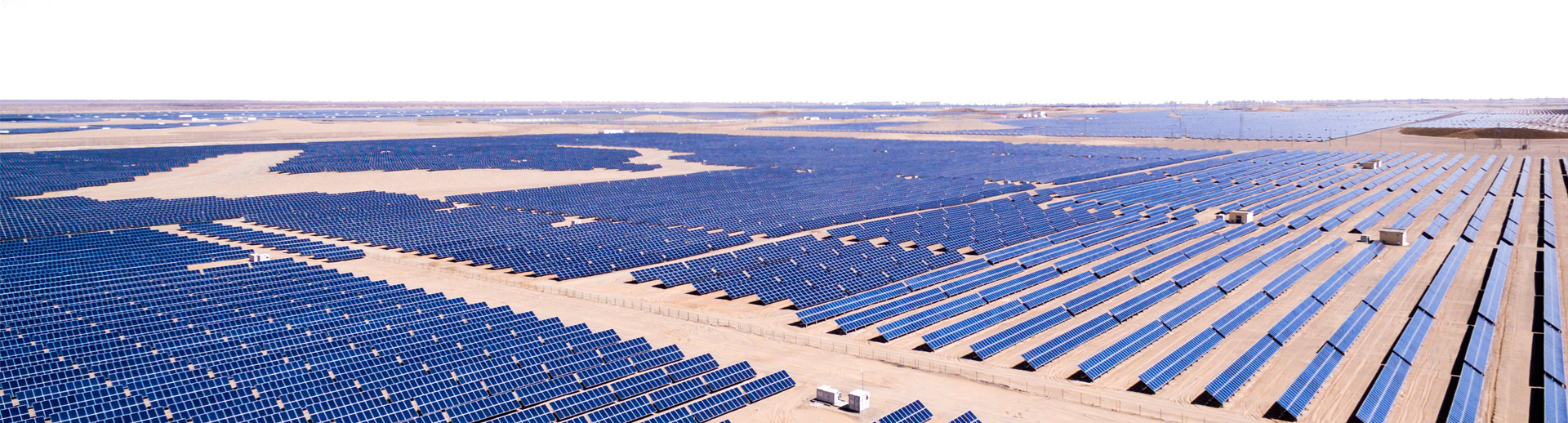
The significant challenge for powering the world with renewable energy is intermittency. For example, solar energy is generated throughout the daylight hours, but the need for that energy continues throughout the night. This is where energy storage comes into play. Efficient energy storage provides clean energy twenty-four hours a day. However, current energy storage batteries are costly, toxic, and corrosive.
Current Energy Storage Batteries Real-World problem
Benefits
Power/Capacity Decoupled
Robust (up to 12k cycles)
Long Storage Times
Problems
Metal-Based Electrolyte ($$$!)
Ionic Membrane Cost ($$$!)
Toxicity
Corrosivity
CarbeniumTec Organic Redox Flow Batteries for long-duration energy storage.
Benefits
Unique Symmetrical Design
Metal-Free and Non-Toxic
Fast Charging Rate
Minimal Cross-Contamination
Low Synthetic Cost
High Cyclability
Inexpensive Porous Membranes

Advanced Metal-Free Solution
Currently, commercial RFBs are aqueous, metal-based batteries using. vanadium, iron, or zinc bromide. These RFBs have two main drawbacks: high cost and high toxicity. Moreover, the cost of metals can fluctuate with the market and geopolitical events. Furthermore, the electrolyte can be highly acidic, which is both an environmental and a product life concern. These drawbacks have limited wide-scale adoption of RFBs. Unlike these current technologies, our battery is based on organic electrolytes that are safe, non-toxic and lower-cost.

Addresses Energy Storage Needs
Electricity starts at the generator fleet with operating reserves, peaking capacity, and black start capability. In the transmission stage, grid services provide frequency regulation, voltage support and energy arbitrage. Finally, the electricity is distributed to consumers with additional voltage support. Our RFB addresses every stage from generator to consumer.

Safe and Environmentally Friendly
Our fully organic technology does not require metal-based RFBs' highly acidic/corrosive conditions, does not generate hydrogen gas as a byproduct, and uses organic solvents that are environmentally friendly, sustainably produced and functional over a wide large temperature range.

Endurance & Low-Cost Utilization
The symmetrical nature of our electrolyte results in no cross-contamination, long cycle life, and it enables the use of low-cost porous membranes in the battery cell.